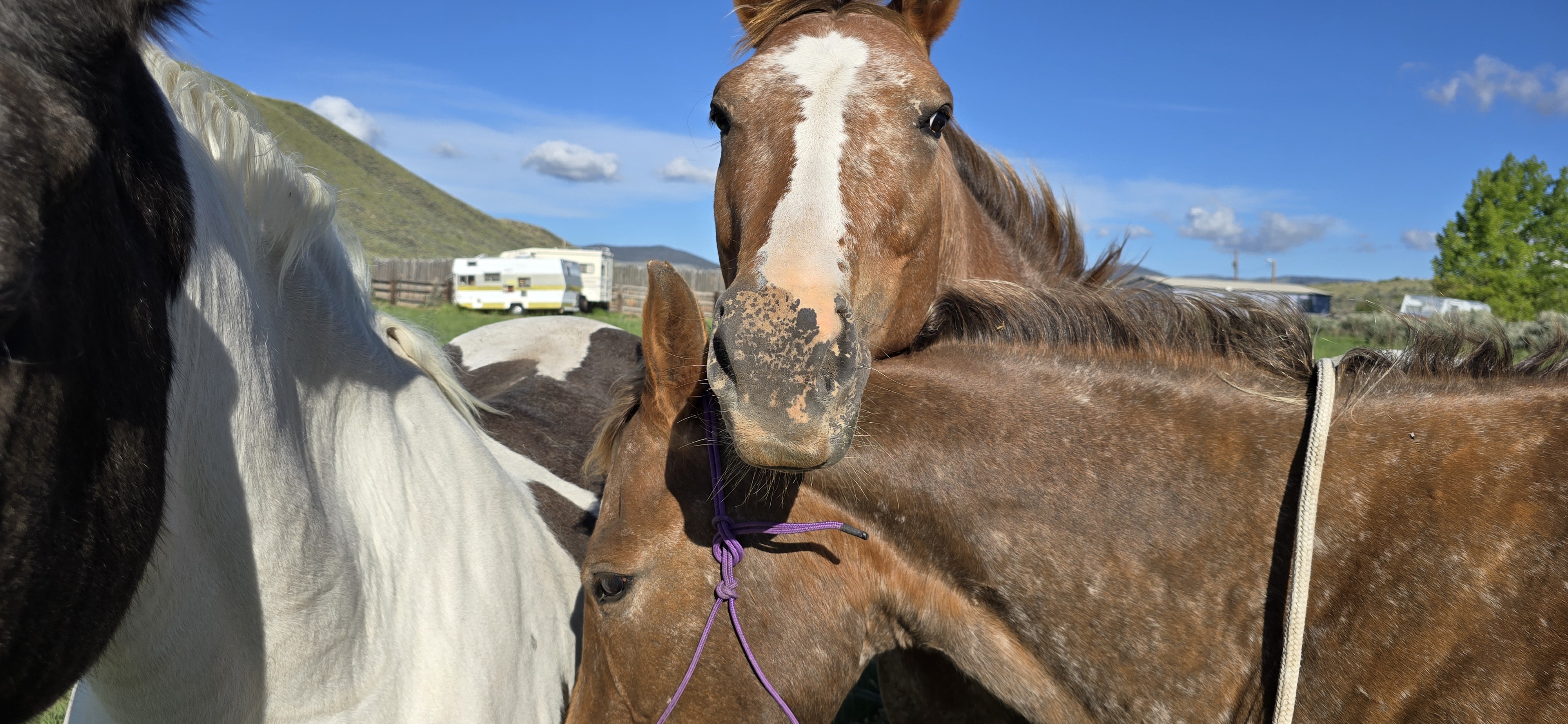
The first piece of tack you should get before bringing your horse home are a good halter and a stick and flag. Now, there are lots o option out there for both of these, but I have my go tos that I always use. I use rope halters. Yes, I know there is a lot going around about the safety of them, but like any tool, the hands behind it are the real problem. Let’s dive into the rope halter and how it should fit on the horses head.
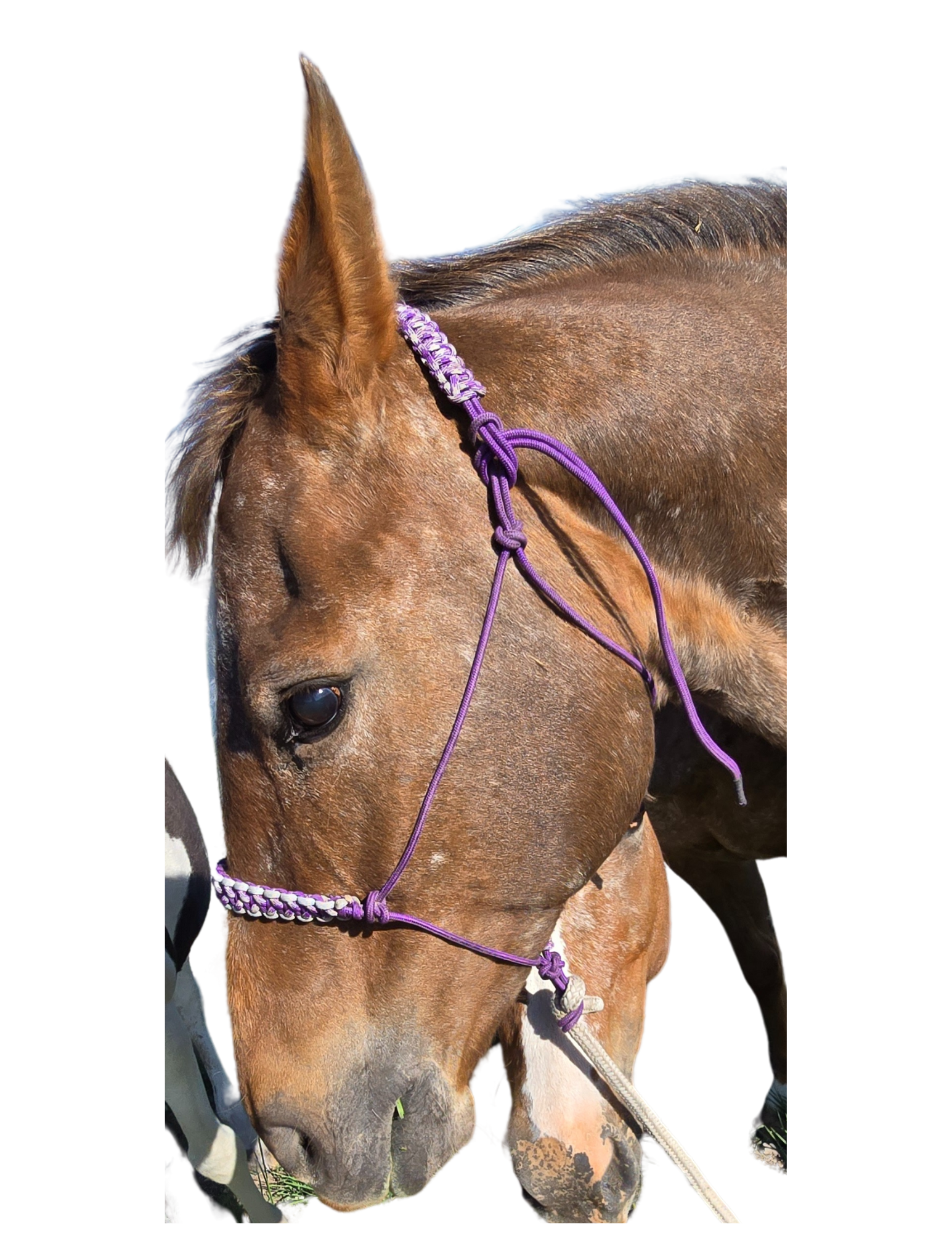
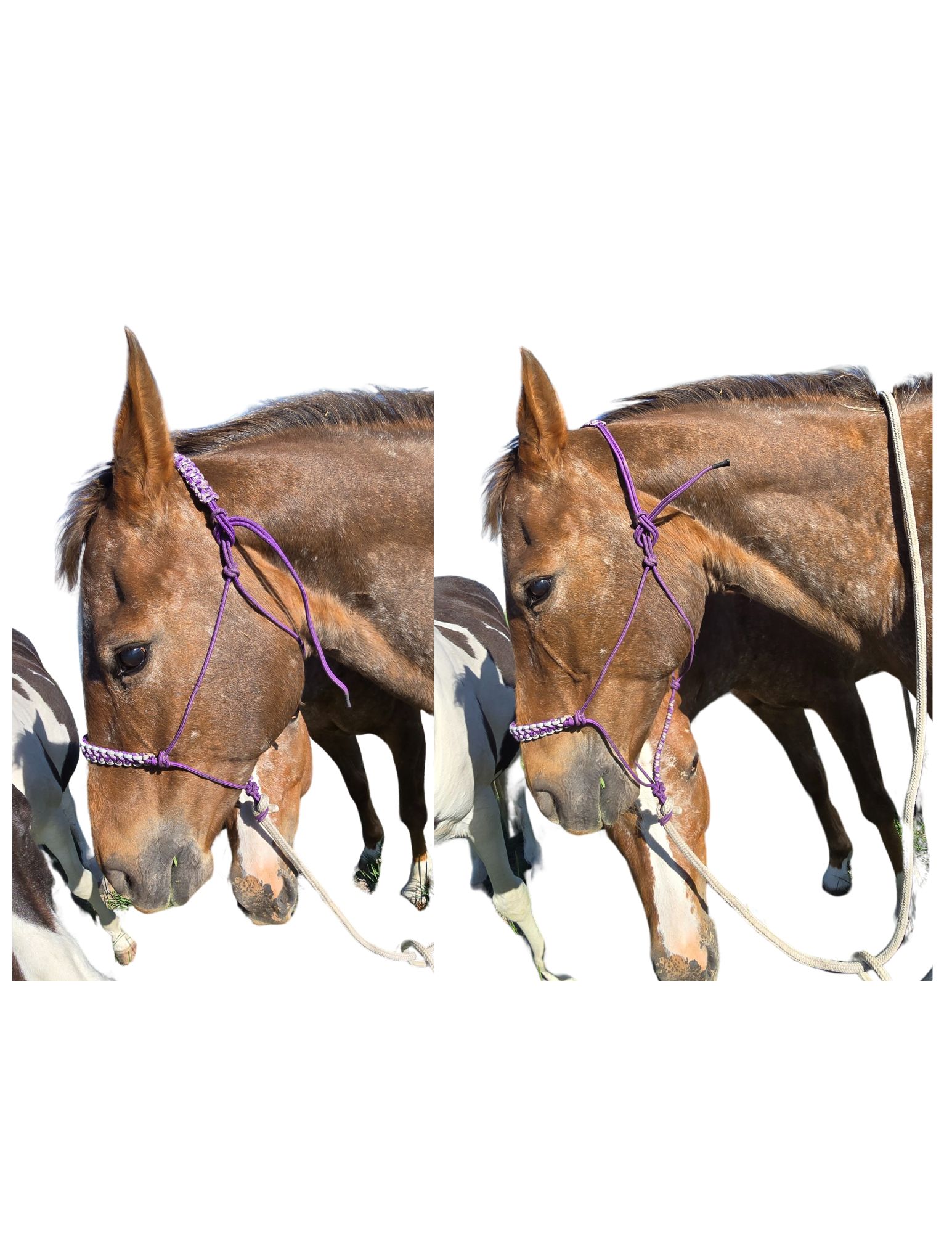
First you need the appropriate size for your horse, be it weanling, yearling, 2 year old/ smaller horse, average size horse, or draft horse. Having a proper fitting halter is extremely important to keep yourself and your horse safe and injury free. The picture above has a properly fitting halter and is on correctly. The picture below, it is too loose.
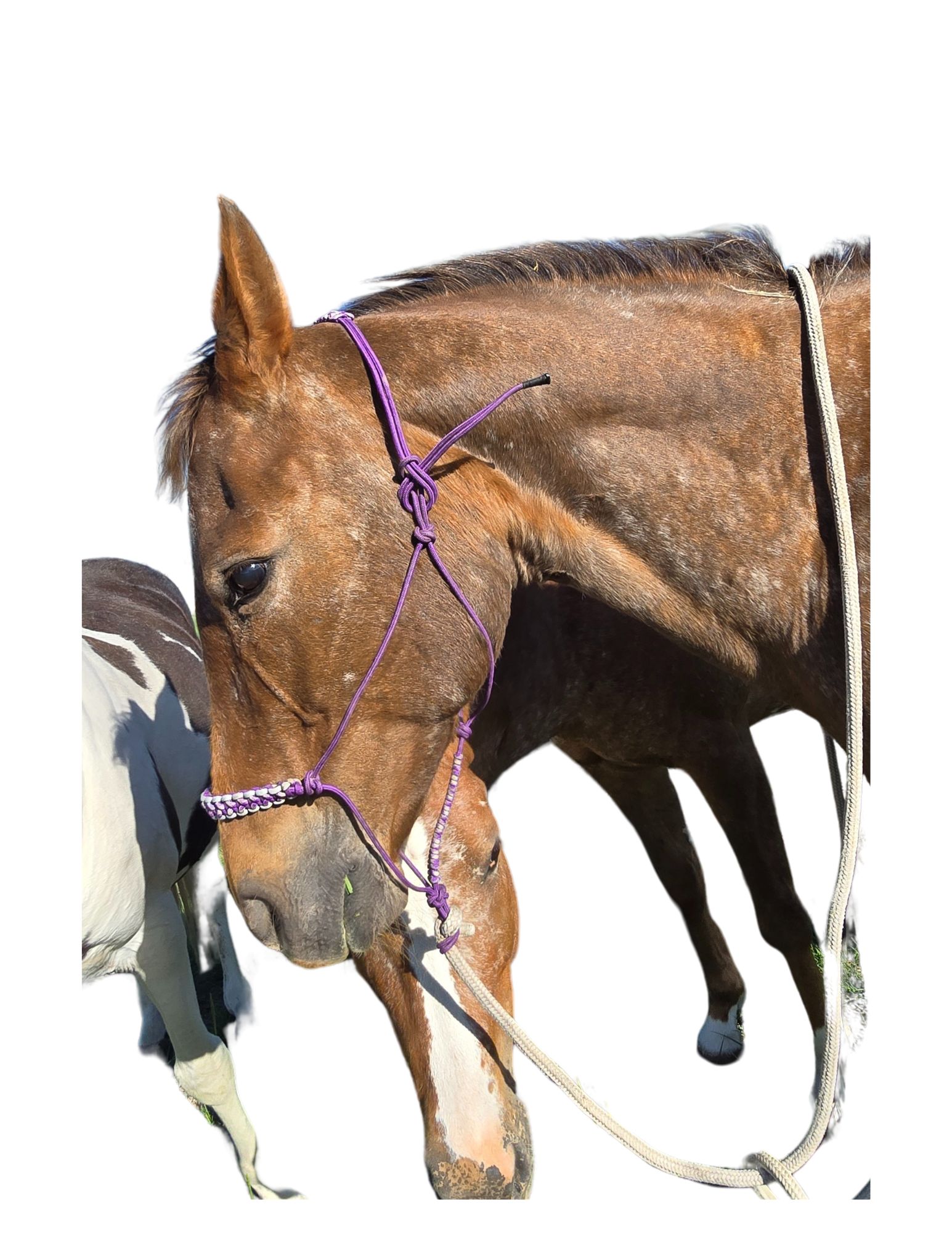
In this picture, you can see how loose the halter is. The throat latch is across her jaw, the nose band is over the fragile nasal structures, and it is far too loose to provide any effective communication.
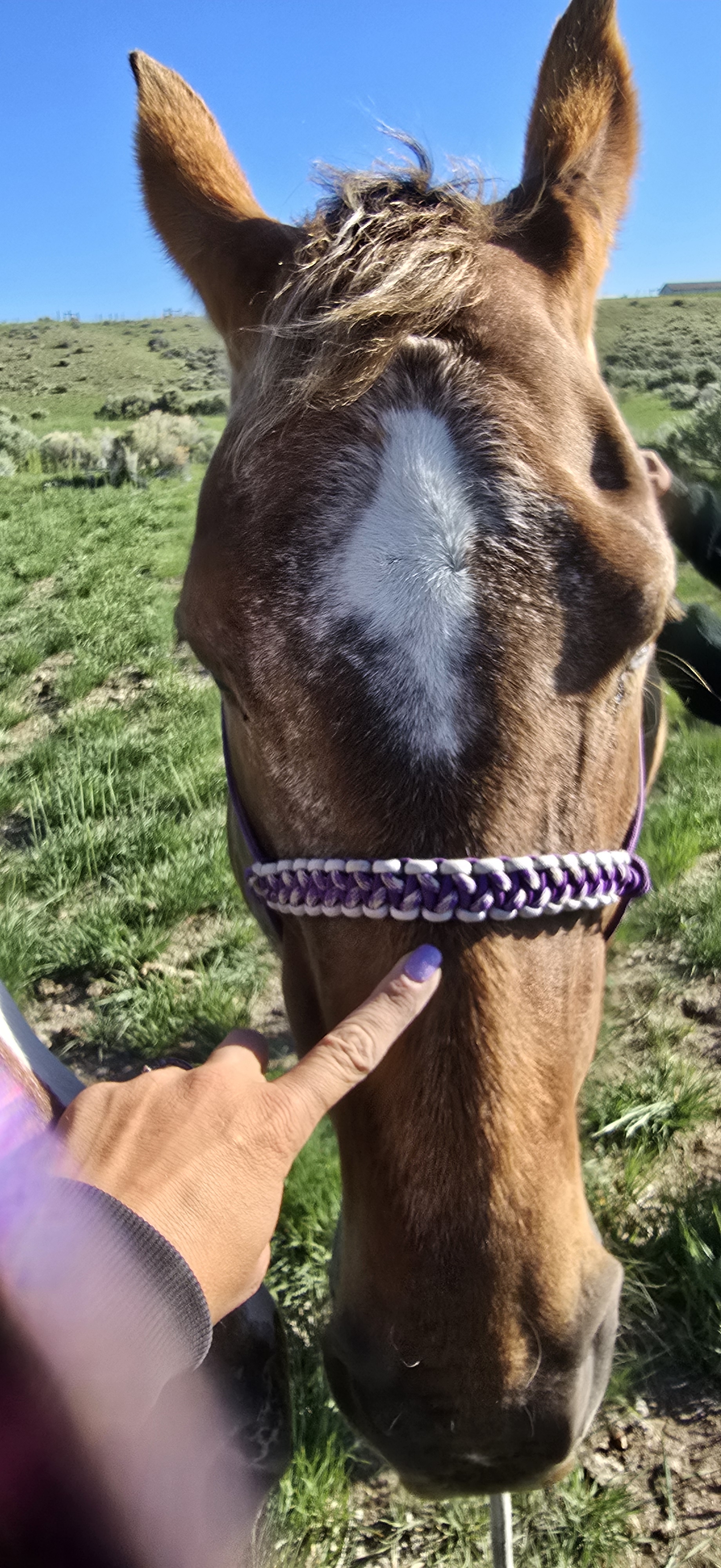
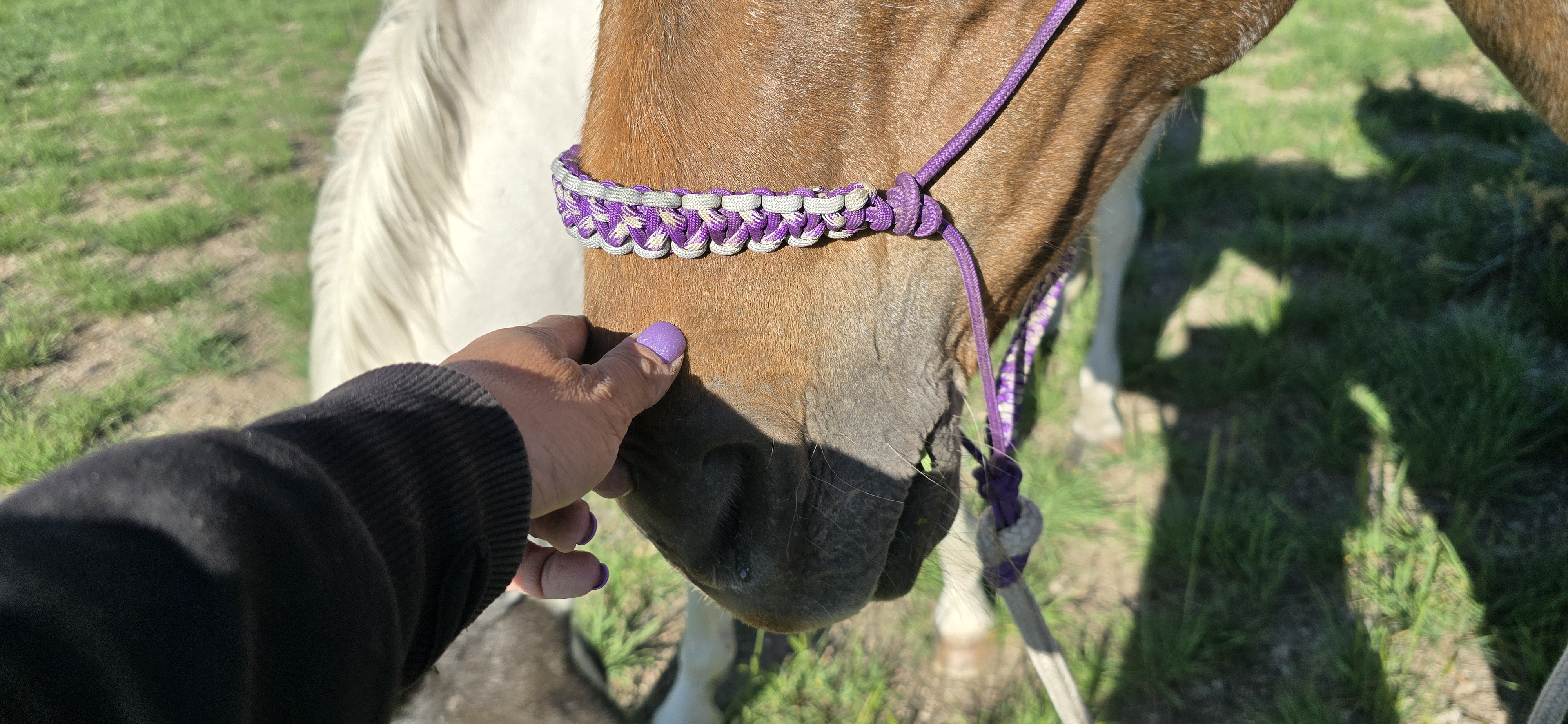
You can see here how high the noseband looks, but it is in the proper place. It is sitting above the more sensitive and fragile parts of her nose. This halter is wider across the nose, distributing the pressure over a larger area. You still don’t want to put excessive pressure on their nose, so soft hands are essential.
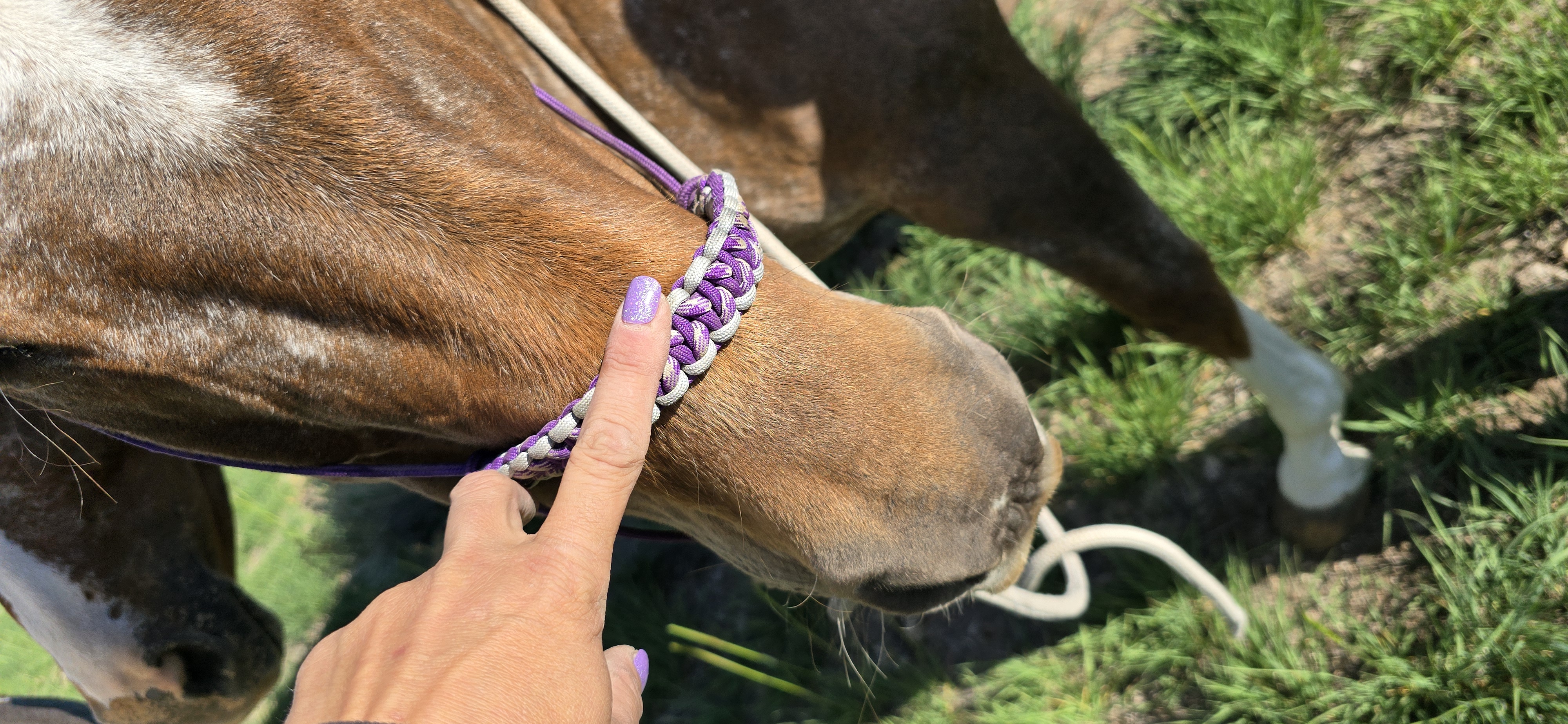
Here (both above and below) it is too low on the horse’s nose and crosses over the fragile nasal structures.
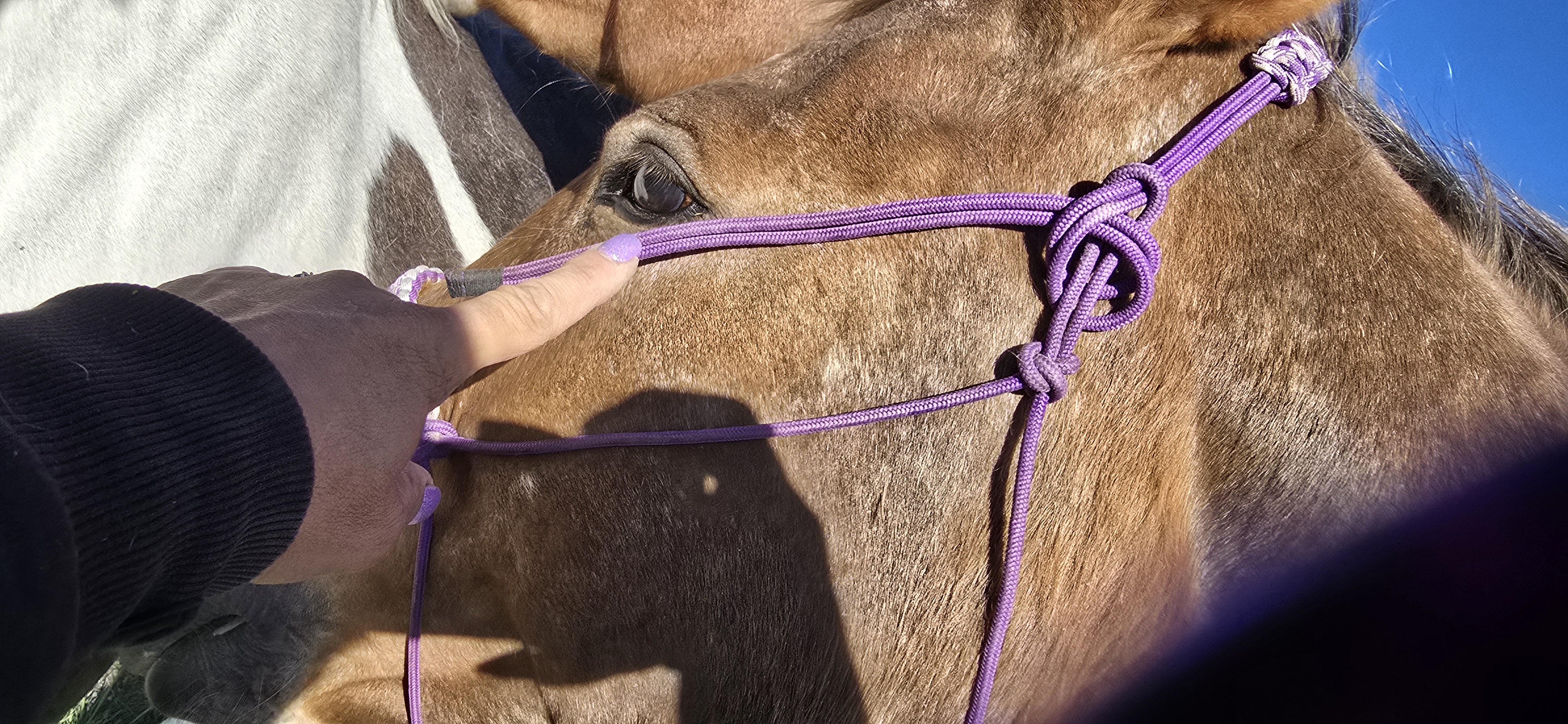
Here, the knot is backwards. It should point to the tail. Having it this way puts the tail of the halter in her eye. Yikes!
Once you have a good halter, the next training tool that i use the most is my stick and flag. Now there are a multitude of options floating around out there. I highly suggest being very picky and willing to pay for a good flag and stick. I have used many different ones over the years made with several materials. Let’s talk about them briefly.
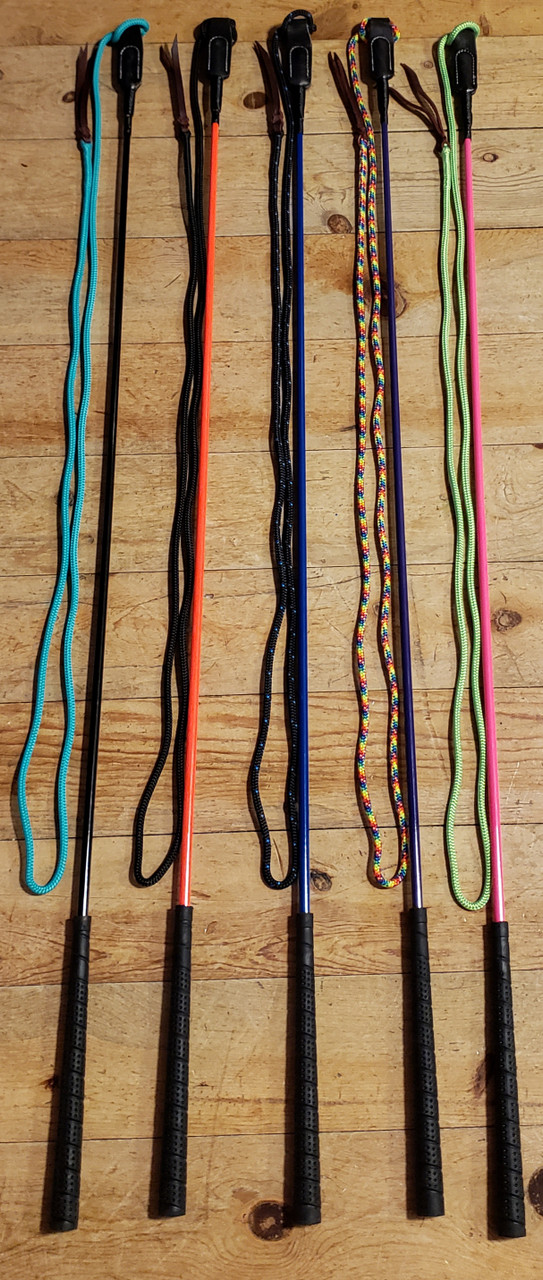
The most common sticks I see these days are fiberglass. While they are lightweight and decently strong, they have a fatal flaw that will keep them out of my tack room. They shatter and splinter.
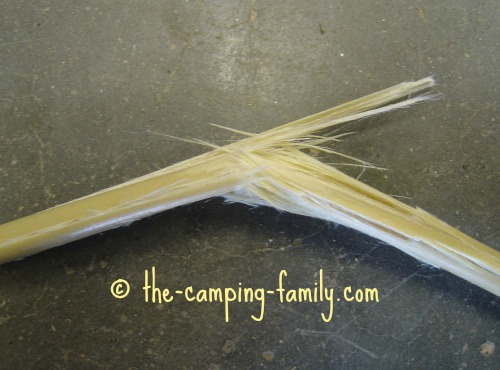
If you have had one do this, you know how bad it can be. Once a fiberglass stick has a crack or weakness in it, it is useless with horses.
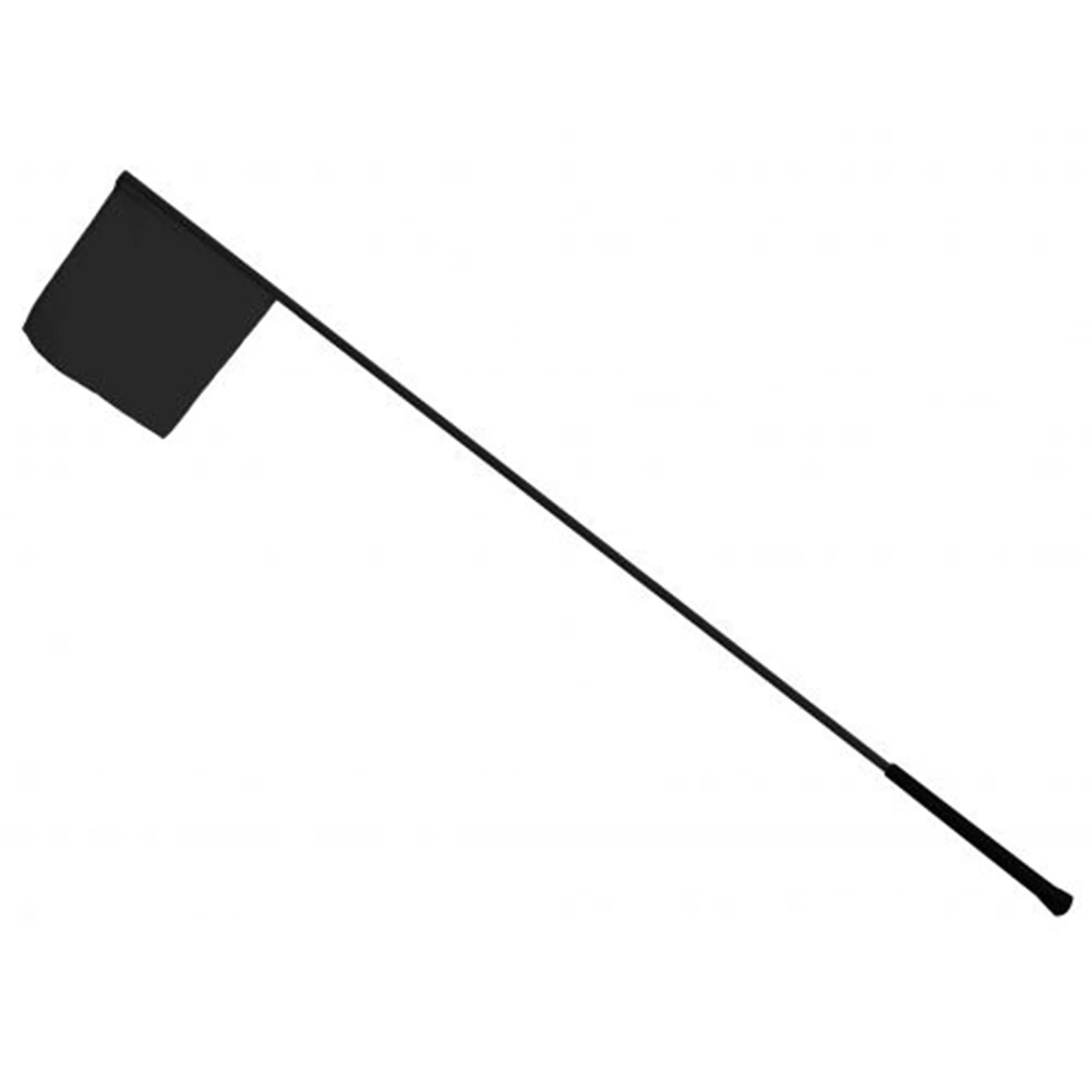
There are, also, plastic one, usually covered with some kind of plastic type braid. These do not shatter, but they are not as strong, though, and will just break in half. But they are a better option than fiberglass just from not splintering. If you look hard enough, you will find the premium option, a metal stick.
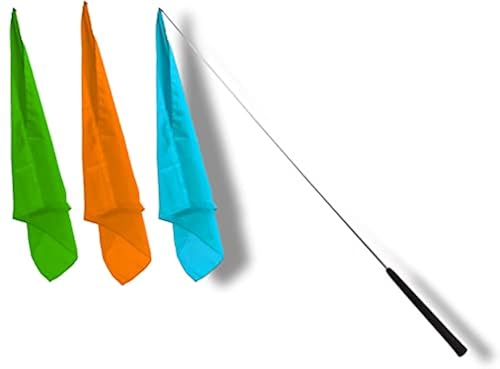
Now, not all metal sticks are created equal. It must be flexible, lightweight, and I prefer a rubber handle. Rubber has a better grip to it over plastic. There needs to be a secure loop on the end for your flag, or whatever else you are using to desensitize with. The loop should be a part of the stick, not a hoop or something attached to it. I have had 2 metal sticks over my 30 years of training. I got the second one because somewhere in moving horses last time, my original metal stick go lost. I did have to look long and hard to find a proper replacement. I found it at a local saddle shop. And it did cost $100 for the stick and flag. Money well spent. It is one of the most used and important pieces of equipment for not only my horses, but my kids 4h animals. Be sure to do your research here and get one to last your lifetime.
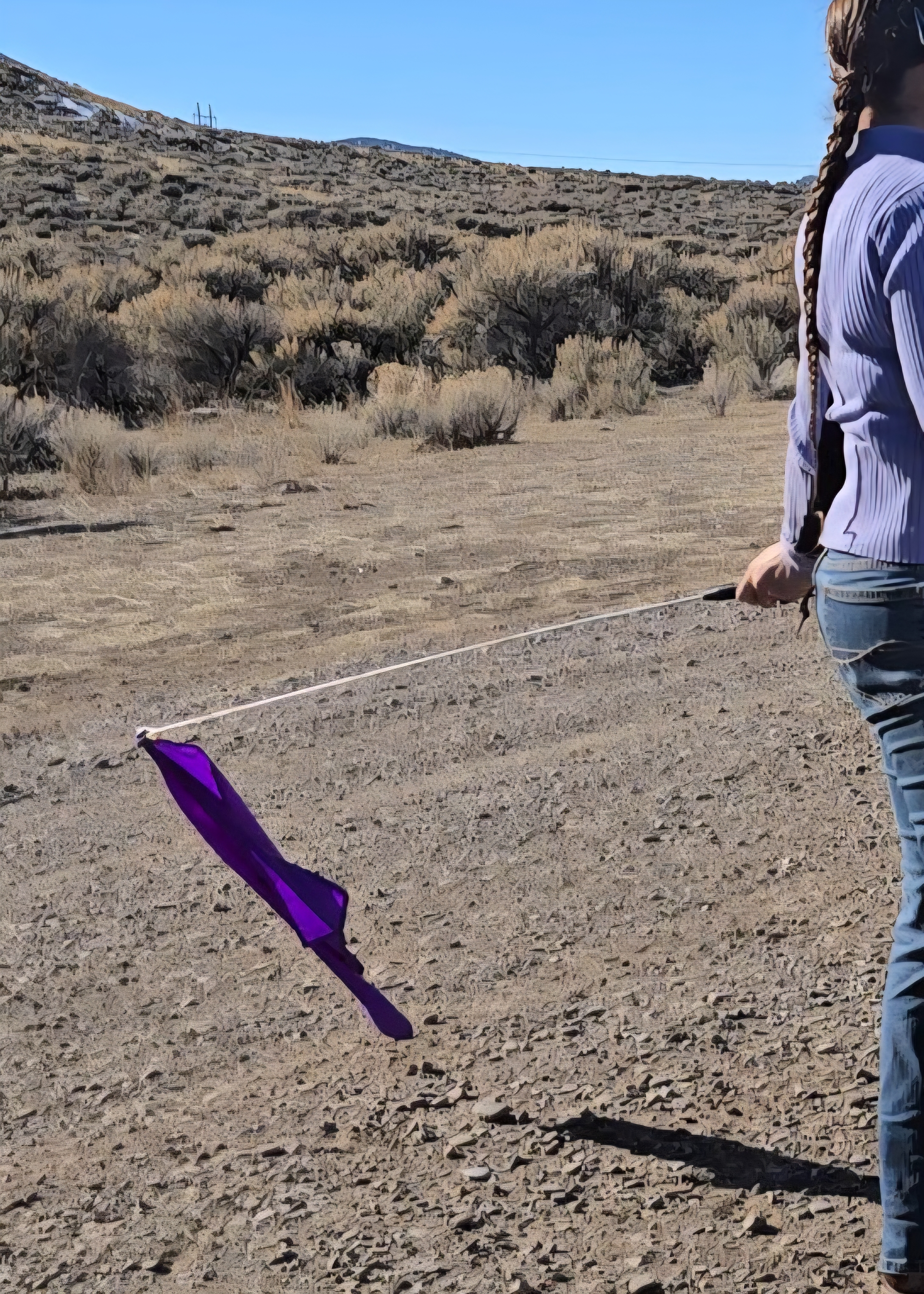
The flag for the stick should be pretty easy to find if the stick does not come with one. It should be the same material as a tent. It should be about 12″x12″ to 18″x18″, and move easily, i.e. flap, make noise, etc. Flags do get worn out and will need to be replaced periodically. If you find a color, style, weight, etc, you really jive with, I suggest getting several so you have replacements for future use.
Regardless of what type of halter and stick you choose to use, your hands are the key to them being helpful or harmful. Keeps your hands light and soft. Be as soft as possible, and firm as necessary.
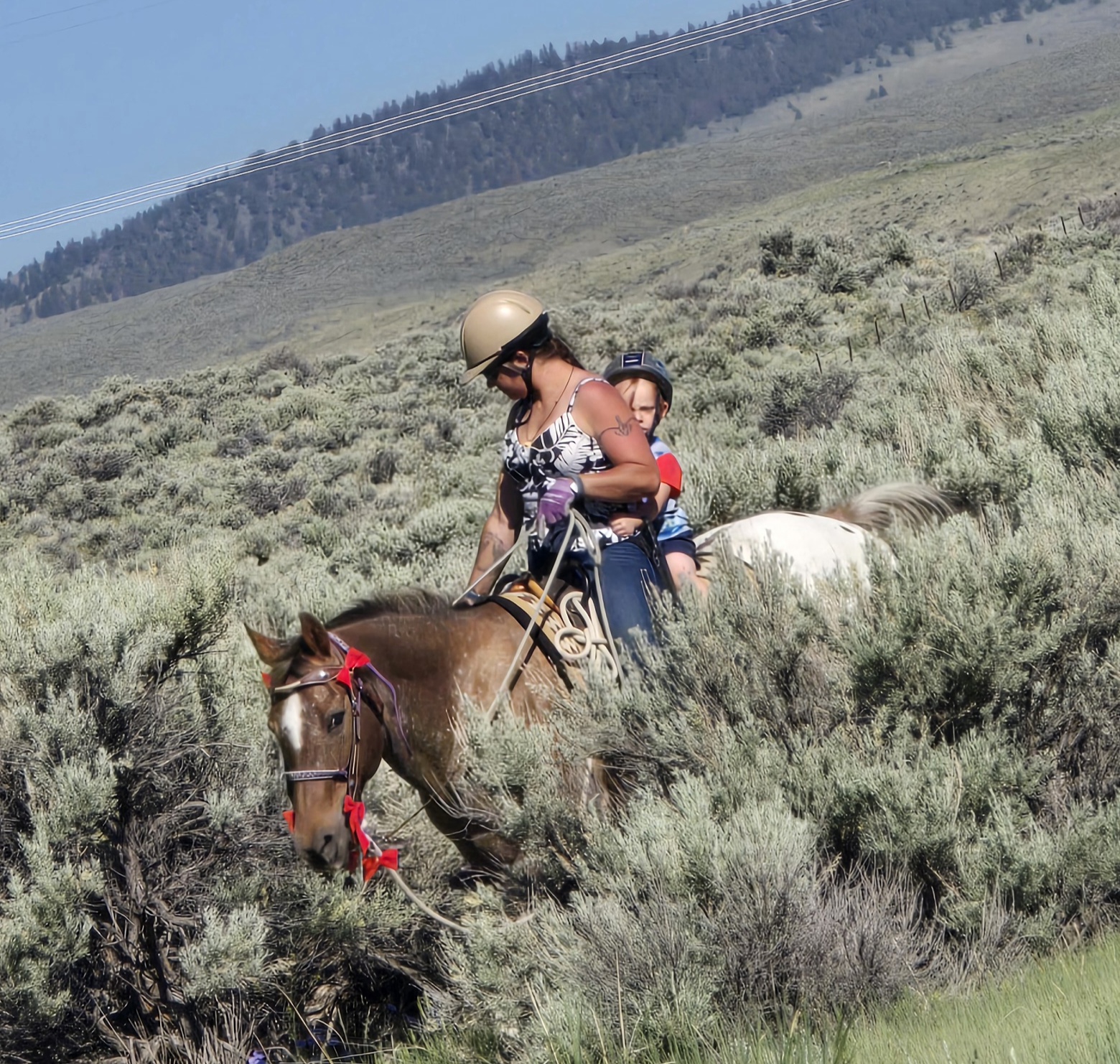
I have been training and showing horses for 30 years. I started in grade school with formal lessons at Rainbow Farms. I, also, helped in the therapeutic riding program. I progressed on into showing in eventing with another local trainer. Through her, met and trained with Alan Fox, coach for the German Olympic teams in the 80s. I trained with him until I bought my 1st horse, a yearling. I chose to dive into western speed events at that point and trained my colt and rode a friends horse to several belt buckets and a ton of feed. I cut back my riding time when I went to Architecture school at MSU. After I left MSU, I started training again. I got my first appaloosa. Through him, I fell in love with them. I took him from Mississippi to Montana to get my bachelors degree in natural horsemanship. We have been here since.
 Redemption Hometead
Leave a comment